
NHTSA ID Number: 10162002
Manufacturer Communication Number: B13-006
Summary
Service Bulletin – American Honda is extending the warranty coverage on the Piston Rings and Pistons for 2009-11 TSX L4 to 8 years from the original date of purchase or 125,000 miles, whichever comes first. The warranty extension does not apply to any vehicle that has ever been declared a total loss or sold for salvage by a financial institution or insurer, or has a branded, or similar tittle under any state’s law.
4 Affected Products
Vehicles
BACKGROUND
American Honda is extending the warranty coverage on the Piston Rings and Pistons for 2009-11 TSX L4 to 8 years from the original date of purchase or 125,000 miles, whichever comes first.
The warranty extension does not apply to any vehicle that has ever been declared a total loss or sold for salvage by a financial institution or insurer, or has a branded, or similar tittle under any state’s law. To check for vehicle eligibility, you must do a VIN status inquiry.
Some vehicles may be affected by S/B 11-021, Product Update: Software Update to Improve Fuel Injector and VTC Timing. Do an iN VIN status inquiry, and if the product update applies, make sure you update the vehicle before continuing with this warranty extension.
Additionally, there are three Tech2Tech videos for reference:
- Tips When Working with Fracture Rods
- Using Cylinder Wall Inspection Tool (To be released in January 2019)
- Let’s Talk Spring Compressors
CLIENT NOTIFICATION
Owners of affected vehicles will be sent a notification of this campaign.
Do an iN VIN status inquiry to make sure the vehicle is shown as eligible.
SYMPTOM
The engine oil level is low on the dipstick, and the oil warning light may come on in rare high oil consumption situations.
POSSIBLE CAUSES
Under certain specific circumstances the engine may create deposits on the oil control rings, which may lead to increased oil consumption when all of the following conditions occur simultaneously on a regular and prolonged basis:
- The engine is cold (not warmed up to operating temperature)
- Hard acceleration while the engine is cold
- The fuel used has an unusually high concentration of particles – Honda recommends using Top Tier gas that contains detergents to prevent deposits. For more information about Top Tier gas, go to www.toptiergas.com.
All these conditions happening at the same time is rare, but if they do, deposits may form over years of driving. If the oil control rings begin to stick because of the deposits, the customer may subsequently complain about excessive oil consumption.
CORRECTIVE ACTION
Do the procedure under DIAGNOSIS and based on your results, replace all of the engine pistons and piston rings if necessary.
Service Advisor: Talk to the customer about the many factors contributing to oil consumption. Remind him or her that with less frequent service intervals for modern engines, it’s not uncommon to add oil between services. Therefore, it’s a good idea to check the engine oil regularly (as recommended in the owner’s manual) and add oil as necessary.
SOFTWARE INFORMATION
NOTE
Unnecessary or incorrect repairs resulting from a failure to update the i-HDS are not covered under warranty. i-HDS Software Version: 3.015.023 or later J2534 Software Information:
- PC Application Version 12-Nov-2014 or later
- Database update 12-Nov-2014 or later
Before beginning the repair, make sure that both the i-HDS and J2534 software are updated as listed above.
Do only the update listed in this service bulletin.
You cannot apply the updates with the MVCI as a standalone tool. To update the software you must use the MVCI or the DST-i interface in conjunction with the J2534 Rewrite PC application on the i-HDS.
For more information about updating the i-HDS, the MVCI, and vehicle systems, refer to Service Bulletin 01-026, Updating Control Units/Modules.
| Year/Model | Program ID (or later) | Program P/N (or later) |
| 2009 Sedan L4 | RL5-A710 | RL5-A710 |
| 2010 Sedan L4 | RL5-A710 | RL5-A710 |
| 2011 Sedan L4 | RL5-A550 | RL5-A550 |
| 2011 Wagon L4 | RL5-A550 | RL5-A550 |
Parts
| Part Name | Part Name | Quantity |
| BOLT, CONNECTING ROD (Up to 8 as required after measurements) | 13204-RBB-004
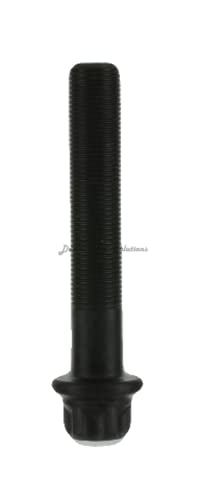
Genuine Honda 13204-RBB-004 Connecting Rod Bolt
| 8 |
| BOLT, WASHER, 11×176 (Up to 10 as required after measurements ) | 90005-RNA-A01

Honda Genuine Bolt-Washer (11X176)
| 10 |
| BOLT, FLANGE, 12×45 ( Side engine mount 1 required ) | 90165-SDA-A00 | 1 |
| BOLT, FLANGE, 12×65 ( Side engine mount 1 required ) | 90168-TA0-A00 | 1 |
| Drain plug washer | 94109-14000

Honda 94109-14000 Oil Drain Plug Gasket Pack of 50
| 1 |
| GASKET, Cylinder Head | 12251-R40-A01
Genuine Honda 12251-R40-A01 Cylinder Head (Nippon Leakless) Gasket
| 1 |
| GASKET, SET | 12030-R44-A00

Genuine Honda 12030-R44-A00 Head Cover Gasket Set
| 1 |
| GASKET, Exhaust Flexible | 18229-SEA-013
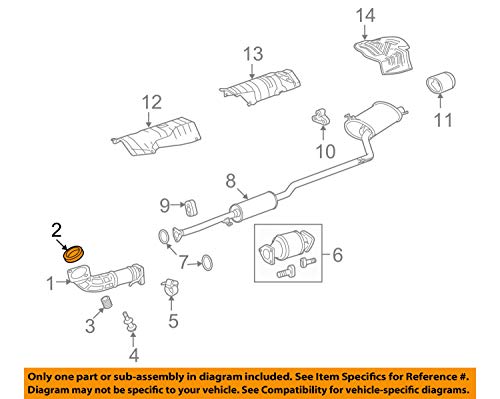
Genuine Honda 18229-SEA-013 Exhaust Flexible Gasket
| 1 |
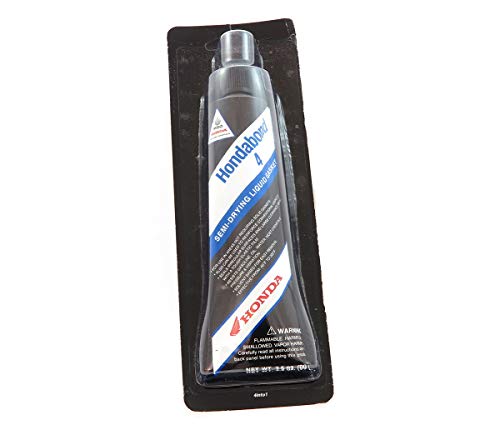
| HondaBond HT ( 1 tube repairs 5 vehicles ) | 08718-0004 | 1 |
| Honda Coolant Type 2 ( 1 gallon will be used to top off 2 vehicles ) | OL999-9011
Sale

Honda Genuine Extended Life Antifreeze/Coolant Type 2, 50/50 Pre-Diluted, 1 Gallon
| 1 |
| Honda Motor Oil, Synthetic Blend 0W-20 ( 6 quarts of oil to be used ) | 08798-9036
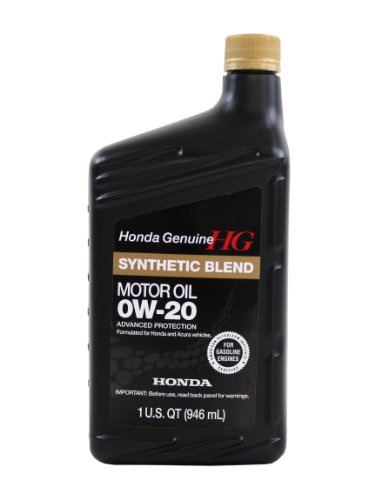
Genuine Honda Parts 08798-9036 0W-20 Blended Synthetic Motor Oil - 1 Quart
| 6 |
| Oil Filter | 15400-PLM-A02
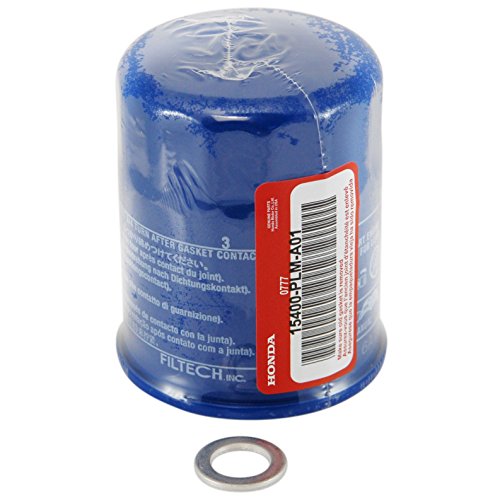
Honda 15400-PLM-A01 Oil Filter w/Washer
| 1 |
| O-Ring ( At oil pump ) | 91301-R40-A01
Honda 91301-R40-A01, Engine Oil Pump Gasket
| 1 |
| O-Ring, Chain Case | 91302-PNA-004

Honda Genuine O-Ring, Chain CASE
| 1 |
| Oil Seal, Control Valve ( O-ring at VTC Valve assembly ) | 15832-PNA-023 | 1 |
| Packing A, Intake Manifold | 17115-R40-A01
Honda Genuine Gasket A
| 4 |
| Piston SET A (STD) ( Up to 4 depending on engine ) | 13010-RL5-A00
No products found. | 4 |
| Piston SET B (STD) ( Up to 4 depending on engine ) | 13020-RL5-A00 | 4 |
| Ring Set (STD) | 13011-RL5-A01

Genuine Honda 13011-RL5-A01 Piston (STD) Ring Set
| 4 |
TOOL INFORMATION
| Part Name | Part Number | Quantity |
| Camshaft Lock Pin Set | 07AAB-RWCA120 | 1 |
| Crank Pulley Holder | 07AAB-RJAA100 | 1 |
| Handle 6-25-660L | 07JAB-001020B | 1 |
| Engine Hanger | AART1256 | 1 |
| Part Name | Part Number | Quantity |
| Gasket Remover/Pan Separator | LIL50190 | 1 |
| Piston Ring Expander | Snap-On PRS8 or equivalent | 1 |
| Piston Ring Compressor | SCP1287 or equivalent | 1 |
| 1/2 in. Drive Torque Angle Gauge | BLMBLDAG001 or
TA360 | 1 |
| Cylinder Wall Inspection Tool | 07AAJR70A300 | 1 |
B13-006
Version 10
June 28, 2019
https://www.nhtsa.gov/recalls?nhtsaId=10162002
https://static.nhtsa.gov/odi/tsbs/2019/MC-10162002-0001.pdf
https://www.nhtsa.gov/recalls?nhtsaId=10058385
https://static.nhtsa.gov/odi/tsbs/2015/SB-10058385-8164.pdf
https://static.nhtsa.gov/odi/tsbs/2015/CSC-10058385-8164.pdf
Reprogramming
i-HDS Diagnostic Software and J2534 Reprogramming Software
Honda J2534 Pass-Thru User Guide
Honda J2534 Pass-Thru Software Download
i-HDS Diagnostic Software and J2534 Reprogramming Software
American Honda Motor Co., Inc. ("Honda") offers the i-HDS (Honda Diagnostic System) software suite for the diagnosis and repair of electronic systems on Honda and Acura automobiles, and for the reprogramming of electronic control units (including, but not limited to, ECMs and PCMs). This software provides access to all Honda and Acura vehicle systems (access to the immobilizer security system requires a Security Professional level software subscription and Vehicle Security Professional [VSP] registration with NASTF). To use the i-HDS software, you need to purchase one of our convenient subscription options. In addition, you will need a pass-thru Vehicle Communication Device (VCI) that is compliant with SAE J2534-1 and J2534-2 in order to communicate with the vehicle
Vehicle Communication Interfaces (VCI)
The i-HDS software supports the use of a generic pass-thru VCI that is compliant with SAE J2534-1 and J2534-2. However, Honda recommends the Denso DST-i or the Bosch MVCI for use on Honda and Acura vehicles, as Honda has worked closely with these manufacturers to ensure their hardware and our software interact safely and within the J2534-1 and -2 specifications, for both diagnostics and reprogramming. If you choose to use a generic VCI, please carefully consider the customer and technical support options you will receive from your chosen device supplier. Honda does not provide technical or customer support for generic VCI devices.
The VCI Application Table below lists devices that either are approved and supported by Honda or are known to have completed and passed an independent, exhaustive validation program with our i-HDS software suite.
| VCI Name | Manufacturer | Version Information | Notes | |
|---|---|---|---|---|
| Firmware | J2534 API | |||
| DST-i | DENSO | 2.02.0002* | 04.04 | This is the current generation VCI used by Honda and Acura dealers. Honda routinely validates the functionality and provides customer support for this device. |
| DST-nano | DENSO | 2.02.0002* | 04.04 | This is the current generation VCI used by Honda Canada Inc. Honda and Acura dealers. Honda routinely validates the functionality and provides customer support for this device. |
| MVCI | Bosch | 3.01.60* | 04.04 | This is the previous generation VCI used by Honda and Acura dealers. Honda routinely validates the functionality and provides customer support for this device. |
| MongoosePro Honda | Drew Technologies | 1.9.5** | 04.04 | This company has completed an independent i-HDS validation and claims it to function with the i-HDS software. Honda does not provide ongoing validation, nor customer support for this device. |
| d-briDGe Pro | Dearborn Group | 3.303** | 04.04 | This company has completed an independent i-HDS validation and claims it to function with the i-HDS software. Honda does not provide ongoing validation, nor customer support for this device. |
* These versions may have been superseded. Honda provides the latest supported versions to current i-HDS subscribers.
** Version used in validation program. See Terms and Conditions and Important Notice Regarding Reprogramming below for more details.
Reprogramming with the J2534 Rewrite Application in i-HDS
Included in the i-HDS software suite is a new reprogramming application called J2534 Rewrite. This application is made available to all subscribers of the i-HDS software suite and replaces the previous generation software, J2534 Honda Pass-thru Reprogramming Software.
This new application is compatible with generic VCIs that comply with SAE J2534. It must be used to reprogram any Honda/Acura vehicle equipped with ECUs that support reprogramming. Refer to the table below for legacy applicability for the programming of ECMs and PCMs. Though system dependent, late-model vehicles may be equipped with other ECUs that support reprogramming as well, e.g. ABS or VSA. J2534 Rewrite must be used to reprogram these control modules, as instructed in an applicable service bulletin.
As shown in this table, not all legacy Honda/Acura models are equipped with a reprogrammable ECM/PCM. Furthermore, all 2007 and later models not listed in the table are fully supported with this application.
DST-i Information:
MVCI Information:

- J2534 Pass-Thru Programmer: TOPDON RLink J2534 is an advanced diagnostic and reprogramming tool that support all J2534 protocols, as well as D-PDU, CAN-FD and DoIP, ensuring compatibility with a wide range of modern vehicles. It offers extensive versatility with support for over 18 major automotive brands, including Chrysler, Ford, GM, Nissan, Toyota, Honda, Subaru, Land Rover/Jaguar, Volvo, Wuling, Volkswagen/Audi, Mercedes-Benz, and BMW. NOTE: Not compatible with Ford IDS diagnostic software
- All-in-One OEM Diagnostics: This J2534 ECU programming tool elevates your automotive repair capabilities to new heights by delivering complete OEM diagnosis. Boasting comprehensive full-system diagnostics, intuitive repair guides, advanced ECU programming and coding, common reset services, a vast library of repair information and more, this all-in-one solution empowers technicians to effortlessly tackle complex vehicle issues with ease. *Not compatible with 24V vehicles
- Proven Performance You Can Trust: Backed by over 10000 real vehicle tests and benefit from a wealth of practical experience, this OEM reprogramming tool guarantees stable and exceptional performance. Supported by TOPDON's dedicated technical experts with in-depth knowledge of both auto repair and J2534 Pass-Thru programming, the RLink J2534 provides prompt and professional assistance, ensuring a smooth setup and reliable compatibility
- Integrated Excellence, Always Up-to-Date: Featuring the exclusive RLink Platform to provide a streamlined experience with one-click driver installation and management, ensuring flawless integration with your OE software, maintaining the original performance quality. The built-in operation guide makes mastering OE software quick and easy, so you can get started right away. Plus, with lifetime free updates, your diagnostics will stay current with the latest drivers and innovations
- Efficiency Meets Versatility: Engineered to support three CAN channels simultaneously - CAN FD and CAN-CC included, giving you the edge in fast troubleshooting. To perfectly synchronized with the OE software, please diagnose with active subscriptions and make sure your computer system is running a compatible 64-bit Windows version (7, 8, 10 or later) to fully leverage the power of RLink J2534. *We don't provide extra OE software

- Advanced VCI Box, Industry-leading J2534 Pass-Thru Technology: This J2534 Pass-Thru Programmer is designed espically for technicians, independent shop owners, and DIY enthusiasts, enables fast, reliable computer-based programming. It supports all J2534 protocols—including the latest DoIP and CAN FD—ensuring full compatibility with both legacy and next-generation vehicles.
- High-Speed OEM-Level Diagnostics & Programming: Unlock true OEM functionality with comprehensive system diagnostics, guided troubleshooting, coding, adaptations, resets, and programming—all designed to slash repair time. This all-in-one tool eliminates the need for multiple OEM devices, boosting efficiency and cutting costs. Equipped with High-Speed USB, it delivers 10x more data per second than competing solutions
- Coverage for 17 Car Brands & Ultra Reliability: Works seamlessly for Chrysler, for Ford(Forscan), for GM, for Nissan, for Toyota, for Honda, for Subaru(SSM4), for Land Rover/Jaguar, for Volvo, for Wuling, for Volkswagen, for Mercedes-Benz, and for BMW. Backed by over 10000 real vehicle tests and benefit from a wealth of practical experience, this OEM reprogramming tool guarantees stable and exceptional performance
- User-Friendly RLink Platform & Expert Support: TOPDON’s proprietary driver management platform offers a clean interface and lifetime free updates. Access a rich library of real-world case studies to stay ahead of the curve. Backed by a support team with 10+ years of J2534 and automotive repair experience, we provide one-on-one assistance to resolve any technical issue.
- 6.6 ft USB-C Cable & Portable Storage Case: The RLink J2534 diagnostic tool features a 6.6ft USB 2.0 Cable and a 1.2 ft OBDII Extension Cable, allows to connection your computer easily outside the vehicle. The included handled carry case offers easy portability, storage, and hanging options—keeping your gear clean and ready to go, anywhere.
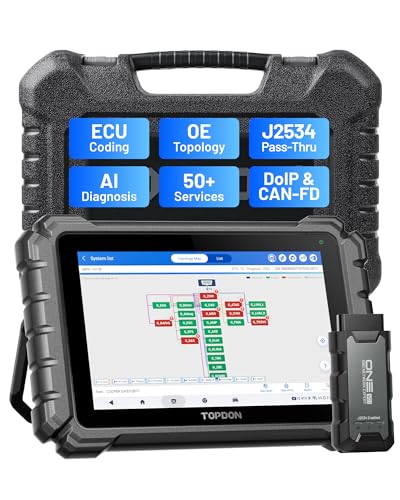
- Dual WiFi & 10.1" Touchscreen: Provides a stable, high-speed wireless link 3x faster than bluetooth, and a responsive, professional interface. Topdon ONE obd2 scanner diagnostic tool ensures smooth, non-lagging diagnostic scan, boosting mechanic efficiency
- J2534 Pass-Thru Support: The included ONE VCI supports the J2534 standard, allowing it to function as a pass-thru device when paired with OEM diagnostic software.Through TOPDON’s RLink platform, technicians can perform dealer-level coding, expanding in-house capabilities without investing in multiple factory automotive scan tools
- OE Topology Mapping: Visualize the vehicle’s ECU network exactly as it’s built.Zoom, pan, and highlight specific modules to pinpoint component issues with precision.Topology mapping displays real-time communication between modules
- 50+ Service Functions: Covers high-demand services like ADAS calibration, DPF regen, TPMS reset, ABS bleed, and throttle adaptation.Expands your service menu, allows you to charge premium rates, and turns away zero jobs due to lack of tooling. Vehicle-specific functionality may vary
- Advaned ECU Coding: 10 of the most serviced brands in North America, including full ECU coding and flash hidden support for BMW, VW, Au-di, Benz, Porsche, Toyota, Ni ssan and more. Enables module replacement, feature customization, and personal settings with automatic backup or restore.Lets your shop safely offer high-margin customization services, attracting more customers and boosting profit

- [J2534 Pass-Thru Programmer] - TOPDON RLink J2534 is engineered for professional technicians, delivering OEM diagnostic and reprogramming capabilities. It supports all J2534 protocols, CAN-FD, DoIP, D-PDU. Compatible with 17 vehicle brands—such as Chrysler, Ford, GM, KIA, Hyundai, Nissan, Toyota, Honda, Subaru, Mitsubishi, MAZDA, Land Rover/Jaguar, Volvo, Volkswagen/Audi, Mercedes-Benz, and BMW. RLink J2534 can help reduce the cost of purchasing equipment from different brands.
- [All-in-One OEM Reprogramming and Diagnostics] - When seamlessly integrated with OEM diagnostic software, this dongle enables you to perform a wide range of functions, including ECU programming and coding, DTC reading and clearing, active tests, component matching, adaptations, rewriting, guided troubleshooting, and more. This all-in-one tool eliminates the need for multiple OEM devices, significantly boosting work efficiency.
- [Tested, Trusted, and Proven for Accuracy] - TOPDON RLink J2534 is renowned for its reliability, having successfully completed over 10,000 real-vehicle tests. The wealth of data and hands-on experience behind it ensures consistent performance and accurate results. You can trust this tool to deliver optimal performance.
- [One-Click Installation, Continuous Updates] - The exclusive TOPDON RLink platform streamlines installation with a one-click driver setup, allowing you to quickly access OEM software for diagnostic and reprogramming tasks. With lifetime free updates, your RLink J2534 stays current without any additional cost, ensuring reliable performance for the long term. *We don't provide extra OE software.
- [Works with Windows Compatibility and OEM Software Subscription] - The RLink J2534 supports three CAN channels - including CAN FD and CAN-CC, providing advantages in the process of rapid troubleshooting. Compatible with Windows 7, 8 and 10 (64-bit) and higher versions of the system. For full functionality, an active OEM software subscription is required for each supported vehicle brand. Please note that the dongle does not include OEM software, which must be purchased separately to access brand-specific diagnostic and reprogramming features.

- 【J2534 Pass-Thru Device】 This budget-friendly J2534 pass-thru device delivers OEM diagnostics and reprogramming capabilities for dealerships, repair shops and automotive DIY enthuisasts, enables you diagnose, program and repair the vehicles more efficiently and precisely. Supporting J2534, D-PDU, CAN-FD and DoIP, this J2534 passthru tool ensures wide vehicle coverage. It's compatible with OE software application, ensuring seamless integration and original performance quality
- 【All-in-One Diagnostic Tool】 Simplify your workflow and tackle the complex diagnostics and repairs with confidence! This J2534 passthrough tool provides full system diagnosis, bi-directional control, maintenance reset services, ECU programming and ECU coding to run advanced diagnostics and programming. Equipped with the specialized platform, this J2534 pass-thru tool is fully compatible with OE software that helps technicians confidently handle complicated vehicle repair issues
- 【J2534 Diagnostic Tool】 The Tabscan J2534 pass-thru device is built with a dedicated platform, making it ideal for both professional and personal use. Simply download the driver for your ford vehicle within the platform—ensuring only one driver is installed at a time. Then connect the device to your vehicle’s OBD2 port and link it to your computer using the included USB A to USB C cable. Finally launch your OE software, select Tabscan J2534 VCI as interface, and begin diagnose and program
- 【Universal Compatibility】 Tabscan J2534 reprogramming tool is designed to be compatible with Ford vehicles for advanced diagnostics and programming. It supports J2534 protocols, along with D-PDU, CAN-FD and DoIP, ensuring seamless connectivity with older or modern vehicles. This J2534 diagnostic tool only works with computer running on windows 7/10/11. Vehicle compatibility varies by model or year, please confirm with us before purchase. Note: It's not compatible with 24V vehicles
- 【Professional Technical Support】 Tabscan J2534 pass-thru device provides a stable and seamless connection between your vehicle and computer for diagnostics, programming, and coding. But that's not all—we go beyond hardware. Our dedicated technical support team brings deep expertise in automotive diagnostics and programming. Whether you need help with setup, troubleshooting or latest diagnostic resources and upgrades, we provide fast, professional and reliable support every step of the way

- ALL OF THE J2534 PROTOCOLS - This single unit has all of the protocols you need for your OEM J2534 reprogramming and diagnostics including the latest in DoIP and CanFD
- J2534 TECHNICAL SUPPORT - FREE for the life of the tool. Staffed by technicians who understand vehicle repair and J2534 Pass‑thru
- TOOLBOX WITH OEM APPLICATION DESCRIPTIONS - educational video tutorials and real-time news – Giving you the confidence and up-to-date knowledge to get the job done
- J2534 v05.00 API - The newest version of J2534 to give you the latest in pass-thru technology
- FUTURE PROOF WITH 4 CAN CHANNELS - Going beyond the 3 required by select Chrysler/FCA models, CarDAQ-Plus 3 also provides a 4th to meet the needs of future OEM applications
SEOCONTENT-START
Service Bulletin 13-006
June 28, 2019 Version 10
Warranty Extension: Sticking Rings Resulting in High Engine Oil
Consumption
Supersedes 13-006, Sticking Rings Resulting in Unusually High Engine Oil Consumption, dated December 19,
2018; see Revision Summary
AFFECTED VEHICLES
Year Model Trim VIN Range
2009-11 TSX ALL Check the iN VIN status for eligibility.
2011 TSX Sport
Wagon
ALL Check the iN VIN status for eligibility.
REVISION SUMMARY
• Under AFFECTED VEHICLES, information was updated.
BACKGROUND
American Honda is extending the warranty coverage on the Piston Rings and Pistons for 2009-11 TSX L4 to 8 years
from the original date of purchase or 125,000 miles, whichever comes first.
The warranty extension does not apply to any vehicle that has ever been declared a total loss or sold for salvage by a
financial institution or insurer, or has a branded, or similar tittle under any state’s law. To check for vehicle eligibility,
you must do a VIN status inquiry.
Some vehicles may be affected by S/B 11-021, Product Update: Software Update to Improve Fuel Injector and VTC
Timing. Do an iN VIN status inquiry, and if the product update applies, make sure you update the vehicle before
continuing with this warranty extension.
Additionally, there are three Tech2Tech videos for reference:
• Tips When Working with Fracture Rods
• Using Cylinder Wall Inspection Tool (To be released in January 2019)
• Let’s Talk Spring Compressors
CLIENT NOTIFICATION
Owners of affected vehicles will be sent a notification of this campaign.
Do an iN VIN status inquiry to make sure the vehicle is shown as eligible.
CLIENT INFORMATION:The information in this bulletin is intended for use only by skilled technicians who have the proper tools, equipment, and
training to correctly and safely maintain your vehicle. These procedures should not be attempted by “do-it-yourselfers,” and you should not assume
this bulletin applies to your vehicle, or that your vehicle has the condition described. To determine whether this information applies, contact an
authorized Acura automobile dealer.
© 2019 American Honda Motor Co., Inc. — All Rights Reserved Page 1 of 29
SYMPTOM
The engine oil level is low on the dipstick, and the oil warning light may come on in rare high oil consumption situations.
POSSIBLE CAUSES
Under certain specific circumstances the engine may create deposits on the oil control rings, which may lead to
increased oil consumption when all of the following conditions occur simultaneously on a regular and prolonged basis:
• The engine is cold (not warmed up to operating temperature)
• Hard acceleration while the engine is cold
• The fuel used has an unusually high concentration of particles – Honda recommends using Top Tier gas that
contains detergents to prevent deposits. For more information about Top Tier gas, go to www.toptiergas.com.
All these conditions happening at the same time is rare, but if they do, deposits may form over years of driving. If the oil
control rings begin to stick because of the deposits, the customer may subsequently complain about excessive oil
consumption.
CORRECTIVE ACTION
Do the procedure under DIAGNOSIS and based on your results, replace all of the engine pistons and piston rings if
necessary.
Service Advisor: Talk to the customer about the many factors contributing to oil consumption. Remind him or her that
with less frequent service intervals for modern engines, it’s not uncommon to add oil between services. Therefore, it’s a
good idea to check the engine oil regularly (as recommended in the owner’s manual) and add oil as necessary.
SOFTWARE INFORMATION
NOTE
Unnecessary or incorrect repairs resulting from a failure to update the i-HDS are not covered under warranty.
i-HDS Software Version: 3.015.023 or later
J2534 Software Information:
• PC Application Version 12-Nov-2014 or later
• Database update 12-Nov-2014 or later
Before beginning the repair, make sure that both the i-HDS and J2534 software are updated as listed above.
Do only the update listed in this service bulletin.
You cannot apply the updates with the MVCI as a standalone tool. To update the software you must use the MVCI
or the DST-i interface in conjunction with the J2534 Rewrite PC application on the i-HDS.
For more information about updating the i-HDS, the MVCI, and vehicle systems, refer to Service Bulletin 01-026,
Updating Control Units/Modules.
Year/Model Program ID (or later) Program P/N (or later)
2009 Sedan L4 RL5-A710 RL5-A710
2010 Sedan L4 RL5-A710 RL5-A710
2011 Sedan L4 RL5-A550 RL5-A550
2011 Wagon L4 RL5-A550 RL5-A550
Page 2 of 29
PARTS INFORMATION
Part Name Part Number Quantity
BOLT, CONNECTING ROD (Up to 8 as required after
measurements)
13204-RBB-004 8
BOLT, WASHER, 11 x 176 mm (Up to 10 as required after
measurements)
90005-RNA-A01 10
BOLT, FLANGE, 12 x 45 mm (Side engine mount 1 required) 90165-SDA-A00 2
BOLT, FLANGE, 12 x 65 mm (Side engine mount 1 required) 90168-TA0-A00 1
Drain Plug Washer 94109-14000 1
GASKET, Cylinder Head 12251-R40-A01 1
GASKET, SET 12030-R44-A00 1
GASKET, Exhaust Flexible 18229-SEA-013 1
HondaBond HT ( 1 tube repairs 5 vehicles ) 08718-0004 1
Honda Coolant Type 2 ( 1 gallon will be used to top off 2
vehicles)
OL999-9011 1
Honda Motor Oil, Full Synthetic 0W20 ( 6 quarts of oil to be
used)
08798-9073 6
Oil Filter 15400-PLM-A02 1
O-Ring ( At oil pump ) 91301-R40-A01 1
O-Ring, Chain Case 91302-PNA-004 1
Oil Seal, Control Valve ( O-ring at VTC Valve assembly ) 15832-PNA-023 1
Packing A, Intake Manifold 17115-R40-A01 4
Piston SET A (STD) (Dealer must determine how many to
order)
13010-RL5-A00 4
Piston SET B (STD) (Dealer must determine how many to
order)
13020-RL5-A00 4
Ring Set (STD) 13011-RL5-A01 4
TOOL INFORMATION
Part Name Part Number Quantity
Camshaft Lock Pin Set 07AAB-RWCA120 1
Crank Pulley Holder 07AAB-RJAA100 1
Handle 6-25-660L 07JAB-001020B 1
Engine Hanger AART1256 1
Page 3 of 29
Part Name Part Number Quantity
Gasket Remover/Pan Separator LIL50190 1
Piston Ring Expander Snap-On PRS8 or
equivalent
1
Piston Ring Compressor SCP1287 or equivalent 1
1/2 in. Drive Torque Angle Gauge BLMBLDAG001 or
TA360
1
Cylinder Wall Inspection Tool 07AAJR70A300 1
NOTES
• Each dealer was sent one cylinder wall inspection tool. If you need more, it is available for dealer ordering.
• The other items can be purchased through the Honda Tool & Equipment Program 888-424-6857.
WARRANTY CLAIM INFORMATION
Operation
Number
Description Flat Rate
Time
Defect
Code
Symptom
Code
Template
ID
Failed Part Number
1111BF Replacing all pistons
and piston rings
10.0 hrs 5X100 JP100 13011-RL5-A01
A A/T Software update 0.2 hr 5X100 JP100 13011-RL5-A01
Skill Level: Repair Technician
Page 4 of 29
DIAGNOSIS
1. Do an engine oil consumption test. Refer to the Job Aid Engine Oil Consumption Test.
2. Review the results of the engine oil consumption test.
• Based on the test results, if the engine is consuming an unusually high amount of oil, contact your DPSM for
approval, then go to REPAIR PROCEDURE.
• Based on the test results, if the engine is consuming a normal amount of engine oil, the vehicle is OK. Explain to
the customer that the vehicle is OK, and that the consumption of oil is within a normal range.
NOTE
Remind the customer to regularly check the engine oil level every time they fill the fuel tank. Modern engines
require less frequent oil changes, which may impact the amount of oil used between oil changes.
REPAIR PROCEDURE
This procedure is an outline form that you can also use as a checklist for the repair. For details on the procedures noted,
refer to the appropriate service manual, or view them online.
• Engine Oil Replacement
• Battery Terminal Disconnection and Reconnection
• Fuel Pressure Relieving
• Coolant Replacement
• Drive Belt Removal/Installation
• Intake Manifold Removal and Installation
• Warm Up TWC Removal/Installation
NOTE
Disconnect TWC at the A-pipe at TWC.
• Fuel Line/Quick-Connect Fitting Removal
• Cylinder Head Removal
• Cam Chain Removal
• Rocker Arm Assembly Removal
• Valve Adjustment
• Oil Pan Installation
• ECM Idle Learn Procedure
NOTES
• Before starting work, make sure to order the correct number of “A” and “B” pistons. Refer to ORDERING
PISTONS at the end of this bulletin.
• Use fender covers to avoid damaging painted surfaces.
• To avoid damaging the wires and terminals, unplug the wiring connectors carefully while holding the connector
portion.
• To avoid damaging the cylinder head, wait until the engine coolant temperature drops below 100°F (38°C) before
loosening the cylinder head bolts. If needed, connect the HDS to the DLC, and monitor ECT SENSOR 1.
• Mark all wiring and hoses to avoid misconnection. Also, be sure that they do not contact any other wiring or hoses,
or interfere with any other parts.
Page 5 of 29
1. Make sure that Service Bulletin 11-021, Product Update: Software Update to Improve Fuel Injector and VTC Timing
is complete by checking the iN VIN status.
NOTE
If you do not confirm software update has been completed, your warranty claim could be debited.
2. Put the vehicle on a lift.
3. Relieve the fuel pressure.
4. Do the battery terminal disconnection procedure.
5. Drain the engine oil.
6. Remove the strut brace (if equipped).
7. Drain the engine coolant.
NOTE
Use a clean container to recover coolant for re-use.
8. Remove the drive belt.
9. Remove the intake manifold. Remove the intake manifold bracket lower bolt.
NOTE
It is not necessary to remove the two nuts or the bracket from the intake manifold.
10. Unbolt TWC at the A-Pipe, leaving the TWC mounted to the cylinder head assembly.
11. Disconnect the brake booster vacuum and EVAP canister hoses.
Page 6 of 29
12. Remove the quick-connect fitting cover, then disconnect the fuel feed hose.
13. Disconnect the four fuel injector connectors, the engine mount control solenoid valve connectors, and disconnect
the ground cables.
14. Remove the four bolts securing the EVAP canister purge valve bracket.
Page 7 of 29
15. Disconnect the radiator hoses and the heater hoses. Disconnect the ATF warmer bypass hose (if equipped).
NOTE
The second radiator hose is connected to the thermostat and is not shown.
16. Remove the two bolts securing the connecting pipe. Disconnect the water bypass hose.
Page 8 of 29
17. Remove the front cam chain cover and the cam chain.
18. Use zip ties to hold the intake rocker assemblies together to ease re-installation.
Page 9 of 29
19. To prevent damage to the camshafts, loosen the bolts, in sequence, two turns at a time. Remove the camshaft
holder bolts, Remove the rocker arm assembly and both cam shafts.
NOTE
Bolt #1 is not on all engines.
20. To prevent warpage, loosen the bolts in sequence 1/3 turn at a time, repeat the sequence until all the bolts are
loosened. Remove the cylinder head bolts.
Page 10 of 29
21. Remove the cylinder head with the catalytic converter attached.
NOTE
Be careful not to lose the lost-motion springs.
22. Raise the vehicle on the lift.
23. Remove the clutch case cover (M/T) or the torque converter cover (A/T), and remove the two bolts securing the oil
pan to the transmission.
Page 11 of 29
24. With A/T: Remove the shift cable cover.
25. Remove the bolts securing the oil pan.
26. Using the pan separator, separate the oil pan from the engine block in the indicated areas, and remove the oil pan.
Page 12 of 29
27. To hold the balance shaft, insert a 6 mm (1/4in.) diameter long pin punch into the maintenance hole in the balance
shaft holder and through the rear balancer shaft.
28. Remove the cam chain and oil pump chain auto-tensioner.
Page 13 of 29
29. Loosen the oil pump sprocket mounting bolt.
30. Remove the oil pump sprocket and the oil pump.
Page 14 of 29
31. Remove the baffle plate.
32. Lower the vehicle to a comfortable working height, and place a clean shop towel around the cylinder wall to prevent
debris from entering the coolant passage.
33. Cylinder Wall Inspection. If vertical scratches are noted in the cylinder wall, refer to Job Aid Using Cylinder Wall
Inspection Tool and or Tech2Tech “Using Cylinder Wall Inspection Tool”.
NOTE
Do not use finger nail or pencil lead to determine if engine block is usable. Always use the cylinder wall inspection
tool to inspect any scratches. Light to moderate scratches that may be detected with your finger nail, but do not
affect the engine, will pass when using the cylinder wall inspection tool.
• If the engine block is good, go to the next step.
• If the engine block is no good, replace the engine block. The pistons and rings in the new engine block do not
need to be replaced. This bulletin no longer applies. You must obtain DPSM authorization and refer online to
Engine Removal and Installation to reinstall the engine.
Page 15 of 29
34. Remove the rod caps and the bearings.
NOTES
• Before removing the rod caps, use a grease pencil or suitable marking pen to mark each cap and its
corresponding connecting rod with the cylinder number it came from.
• Do not confuse the existing marking on the side of the connecting rod and rod cap with a cylinder number. They
are just manufacturing marks referring to the size of the big end of the rod.
• Installing a rod cap incorrectly will result in engine knock and/or engine failure. Remove and mark one rod
assembly at a time to make sure it is assembled correctly.
• When torqueing the rod cap bolts, refer to the service information for details.
• Click HERE to go to the Tech2Tech® video “Tips When Working with Fracture Rods”.
35. Use a wooden hammer handle to drive out each of the piston and connecting rod assemblies.
NOTE
Be careful not to damage the cylinder walls or the crankshaft when pushing out the pistons and the connecting rod
assemblies.
36. Visually inspect all the connecting rod bearing for signs of damage.
NOTES
• If your fingernail catches on a scratch or groove in the bearing, replace it. Pictured are normal reusable rod
bearings after about 35,000 miles. Some discoloration is normal and does not require replacement.
• If the bearings look like they must be replaced, contact your DPSM for authorization.
Page 16 of 29
37. Measure the diameter of each connecting rod bolt at points A and B.
37.1. Calculate the difference in diameter between points A and B:
• Point A – Point B = Difference in Diameter
• Difference in Diameter Specification: 0 – 0.1 mm (0.004 in.)
• If the difference in diameter is out of specification, replace the connecting rod bolt.
38. Put on eye protection, then remove the snap rings from both sides of each piston. Start at the cutout in the piston
pin bore. Remove the snap rings carefully so they don’t go flying or get lost.
39. Put on gloves, heat the piston and the small end of the connecting rod to about 158°F (70°C), then remove the
piston pin.
NOTE
The old piston, the pin, and the snap rings won’t be reused.
Page 17 of 29
40. Install a new piston pin snap ring on one side of a new piston.
41. Coat the piston pin bore in the piston, the bore in the connecting rod, and the piston pin with new engine oil.
42. Heat the piston to about 158°F (70°C).
43. Assemble the piston and the connecting rod with the arrow and the embossed mark on the same side. Install the
piston pin.
NOTE
When the piston and the rod end are heated properly, the piston pin should slide into position relatively easily. You
will damage the piston if you try to use a hammer or a press to force the piston pin in.
44. Install the remaining snap ring.
Page 18 of 29
45. Turn the snap ring in the ring grooves until the end gaps are positioned at the bottom of the piston.
46. Repeat steps 38 through 45 for the remaining pistons.
47. Using a piston ring expander, install the spacer and two oil rings. Then install the second ring and top ring with the
manufacturing marks facing up. The second ring has a “2” followed by a letter or letters. The top ring has a “1”
followed by a letter or letters.
NOTE
The new rings may not have the same manufacturing marks as the originals.
48. Rotate the rings in their grooves to make sure they do not bind.
49. Position the ring end gaps as shown.
50. Rotate the crankshaft so that cylinders 1 and 4 are at bottom dead center (BDC).
51. Remove the connecting rod cap to piston 1, and check that the bearing is securely in place.
Page 19 of 29
52. Apply new engine oil to the piston, the inside of the ring compressor, the cylinder bore, and the rod bearings.
NOTE
Cylinder wall honing is NOT required for this repair.
53. Position the mark to face the cam chain end of the engine block.
54. Set the piston in the ring compressor, and position the piston in the cylinder based on the rod/cap marks that you
made in step 34.
55. Set the ring compressor on the piston bore, then push the piston in with your hands.
Page 20 of 29
56. Stop after the ring compressor pops free, and check the connecting rod-to-rod journal alignment before pushing the
piston into place.
57. Apply new engine oil to the bolt threads, then install the connecting rod cap with the bearing. Torque the bolts to 41
N·m (30 lb-ft).
58. Tighten the connecting rod bolts an additional 120°.
NOTE
If you tighten a rod bolt beyond the specified angle, remove it and repeat steps 57 and 58. Do not loosen the bolt
back to the specified angle.
59. Repeat steps 47 through 58 for piston number 4.
60. Rotate the crankshaft so that cylinders 2 and 3 are at bottom dead center (BDC).
61. Repeat steps 47 through 58 for piston number 2 and 3.
62. Rotate the crankshaft several times after all connecting rods have been installed to ensure that nothing is binding.
63. Install the baffle plate, and torque the bolts to 12 N·m (8.7 lb-ft).
64. Set the crankshaft to top dead center (TDC). Align the TDC mark on the crankshaft sprocket with the pointer on the
engine block.
65. Apply new engine oil to the threads of the oil pump mounting bolts and the oil pump sprocket mounting bolt, then
loosely install the oil pump with a new O-ring.
Page 21 of 29
66. Torque the oil pump mounting bolts and the oil pump sprocket mounting bolt according to figure shown.
67. Align the dowel pin on the rear balancer shaft with the mark on the oil pump.
68. Install the oil pump chain on the crankshaft sprocket with the colored link plate aligned with the TDC mark on the
crankshaft sprocket.
Page 22 of 29
69. Set the oil pump sprocket on the oil pump chain with the punch mark aligned with the center of the colored link
plates, then install the oil pump chain sprocket to the oil pump.
Apply new engine oil to the threads of the oil pump sprocket mounting bolt, then install it and torque it to 44 N·m (33
lb-ft).
70. Install the oil pump chain auto-tensioner, and torque the bolts to 12 N·m (8.7 lb-ft).
71. Remove the 6 mm (1/4 in.) diameter long pin punch.
72. Remove the 3.0 mm pin from the oil pump chain auto-tensioner.
73. Remove all of the old liquid gasket from the oil pan mating surfaces, the bolts, and the bolt holes.
74. Clean and dry the oil pan mating surfaces.
Page 23 of 29
75. Apply liquid gasket, P/N 08718-0004 to the engine block mating surface of the oil pan and to the inside edge of the
threaded bolt holes. Install the component within 5 minutes of applying the liquid gasket.
NOTES
• Apply a 2.5 mm (0.098 in) diameter bead of liquid gasket along the broken line.
• If more than 5 minutes have passed after applying the liquid gasket, remove the old liquid gasket and residue,
then reapply new liquid gasket.
• Do not apply any sealant where the cam chain case is installed because the sealant will dry before you can
reinstall the case.
76. Install the oil pan to the engine block.
77. Tighten the bolts in three steps. In the final step, torque all bolts, in sequence, to 12 N·m (9 lb-ft).
NOTES
• Wait at least 30 minutes after installing the cam chain case before filling the engine with oil.
• Do not run the engine for at least 3 hours after installing the oil pan.
78. Install a new oil filter.
79. Reinstall the clutch case cover and torque the bolts to 12 N·m (8.7 lb-ft). Reinstall the two bolts securing the oil pan
to the transmission and torque them to 64 N·m (47 lb-ft).
80. With A/T: Reinstall the shift cable cover, and torque the bolts to 12 N·m (9.0 lb-ft).
Page 24 of 29
81. Reinstall the cylinder head with a new gasket.
• Measure the diameter of each cylinder head bolt at point A and point B.
• If either diameter is less than 10.8 mm (0.417 in), replace the cylinder head bolt.
• Apply new engine oil to the threads and under the bolt heads of all cylinder head bolts.
• Torque the cylinder head bolts in sequence to 39 N·m (29 lb-ft). When using a preset click-type torque wrench,
be sure to tighten slowly and do not overtighten. If a bolt makes any noise while you are torquing it, loosen the
bolt and retighten it from the first step.
• After torqueing, tighten all cylinder head bolts in two steps (90° per step) using the sequence shown above. If
you are using a new cylinder head bolt, tighten the bolt an extra 90°.
NOTE
Remove the cylinder head bolt if you tightened it beyond the specified angle, and go back to the second bullet to
re-measure the bolt. Do not loosen it back to the specified angle.
Page 25 of 29
82. Reinstall the rocker arm assembly and the camshafts.
83. Reinstall the cam chain.
84. Apply liquid gasket to the oil pan where it meets the cam chain case and to the inside edge of the threaded bolt
holes. Install the cam chain case within 5 minutes of applying the liquid gasket.
85. Install the cam chain cover.
86. Reinstall crank pulley and torque the bolt to 49 N·m (36 ft-lb).
Page 26 of 29
87. Adjust the valve clearance. Refer to the service manual for Valve Clearance Adjustment.
Valve Clearance:
Intake: 0.21 – 0.25 mm (0.0083 – 0.0098 in)
Exhaust: 0.25 – 0.29 mm (0.0098 – 0.0114 in)
Specified Torque (Intake & Exhaust)
7 x 0.75 mm: 14 N·m (1.4 kgf·m, 10 lbf·ft)
Apply new engine oil to the nut threads.
88. Reinstall or reconnect the following components:
• Reinstall the cylinder head cover.
• Reinstall the coolant connecting pipe.
• Reinstall the EVAP canister purge valve bracket.
• Reconnect the four fuel injectors, the engine mount control solenoid connector, and the ground cables.
• Reconnect the fuel feed hose and the quick connect fitting cover.
• Reconnect the EVAP canister hose.
89. Install a new gasket from TWC to A-pipe.
90. Install the intake manifold using new gaskets.
91. Reinstall the drive belt.
92. Fill the engine with coolant using recovered coolant. Add new as needed.
93. Reinstall the strut brace (if equipped), and torque the bolts to 22 N·m (16 lb-ft).
94. Fill the engine with oil.
Page 27 of 29
95. Reinstall right side engine mount.
96. Do the battery terminal reconnection procedure.
97. Crank the engine for about 5 seconds to prime the engine with oil pressure before plugging in the ignition coils.
98. Reconnect the four ignition coils.
99. Do the idle learn procedure.
Page 28 of 29
ORDERING PISTONS
Every engine has some combination of A- and B-sized pistons. You can determine the sizes and their locations in the
block by inspecting the markings on the timing chain end of the engine block or by looking at the pistons. If you look at
the piston, the pistons have identifiers; “A” pistons are unmarked; “B” pistons are marked with a “B”. Make sure you
order the appropriate number of each piston size before starting work.
END
Page 29 of 29
SEOCONTENT-END
This product presentation was made with AAWP plugin.