
Service Bulletin
A16-013
July 20, 2018
Version 6
High Pressure Fuel Pump Chirps
Supersedes 16-013, dated April 26, 2018, see REVISION SUMMARY.
AFFECTED VEHICLES
| Year | Model | Trim | VIN Range |
| 2016-18 | Pilot | ALL | ALL |
| 2017-19 | Ridgeline | ALL | ALL |
| 2018-19 | Odyssey | ALL | ALL |
REVISION SUMMARY
Under REPAIR PROCEDURE, a torque specification was revised.
SYMPTOM
There is a chirping coming from the engine area with the engine warmed up.
POSSIBLE CAUSES
The high pressure fuel pump is making a chirp.
NOTE
This noise does not impact pump, engine function, or reliability.
CORRECTIVE ACTION
Replace the high pressure fuel pump.
PARTS INFORMATION
| Part Name | Part Number | Quantity |
| Fuel Joint Pipe Set | 16012-R9P-315 | 1 |
| High Pressure Fuel Pump | 16790-RLV-305 | 1 |
| Retainer | 17711-S0X-931
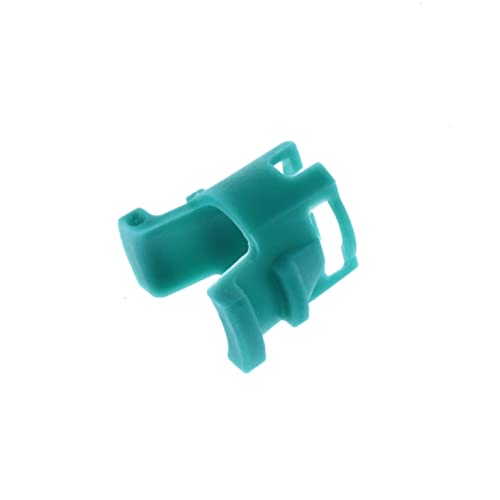
Honda Genuine Retainer
| 1 |
| EGR Pipe Seal | 17103-RLV-A01 | 2 |
| Intake Manifold Gasket | 17101-RLV-A01 | 6 |
| Throttle Body Gasket | 17102-RLV-A01 | 1 |
| Intake Manifold Gasket | 17065-R9P-A01
No products found. | 1 |
| Intake Manifold Gasket | 17055-R9P-A01
No products found. | 1 |
| EGR Pipe Gasket | 18716-RB0-G01
Genuine Honda 18716-RB0-G01 EGR Pipe Gasket A
| 1 |
WARRANTY CLAIM INFORMATION
The normal warranty applies.
| Operation Number | Description | Flat Rate Time | Defect Code | Symptom Code | Template ID | Failed Part Number |
| 1211U6 | Pilot and Ridgeline
Replace the high pressure fuel pump. | 1.6 hrs | 03214 | 04201 | 16-013A | 16790-5J6-305 |
| 1211U6 | Odyssey
Replace the high pressure fuel pump. | 1.1 hrs | 03214 | 04301 | 16-013B | 16790-5J6-305 |
Skill Level: Repair Technician
DIAGNOSIS
- If the noise is coming from the high pressure fuel pump, go to REPAIR PROCEDURE.
- If the noise is not coming from the high pressure fuel pump, continue with normal troubleshooting.
REPAIR PROCEDURES
- Relieve the fuel pressure. See service information.
- Set the No. 1 piston at top dead center (TDC). See service information.
- Remove the intake manifold and intake manifold base. See service information.
- Remove the high pressure fuel pump cover.
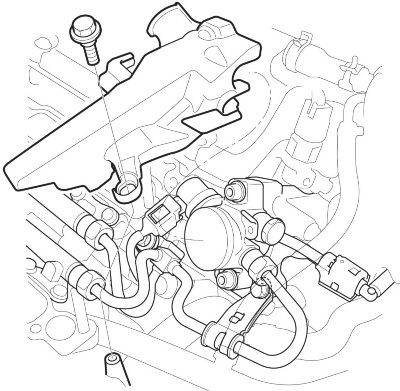
- Remove the quick-connect fitting cover.
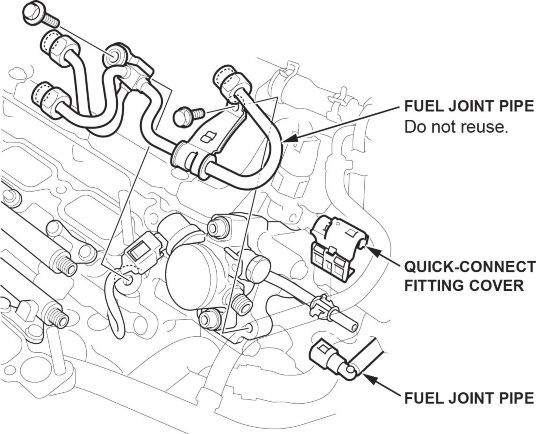
- Disconnect the quick connect fitting.
- Remove the fuel joint pipe.
- Disconnect the high pressure fuel pump connector.
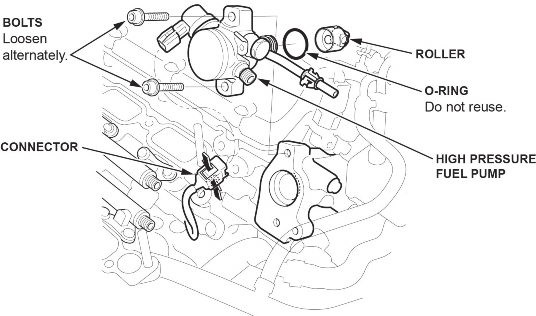
- Remove the bolts by loosening them alternately, then remove the high pressure fuel pump and the roller.
- Rotate the crankshaft and check the high pressure fuel pump cam for pits, scores, and excessive wear. If needed, replace the rear camshaft.
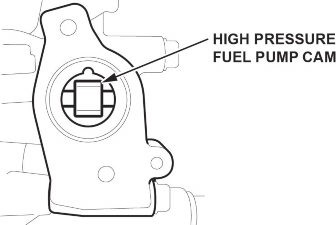
- Set the No. 1 piston at top dead center (TDC).
- Install the roller onto the high pressure fuel pump cam.
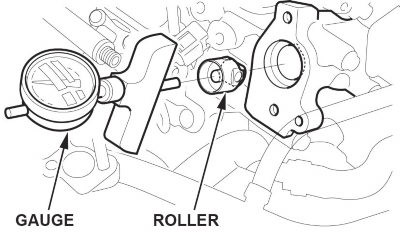
- Set the gauge on the roller and hold it, then set the dial to zero.
- Rotate the crankshaft 720° and measure the three cam lobes height. If the cam lobes are excessively worn, replace the rear camshaft.
NOTE
The high pressure fuel pump cam has three cam lobes. Cam Lobe Height Standard (New): 0.236 in (6.0 mm)
- Set the No. 1 piston at top dead center (TDC).
- Check the position of the cam that drives the high pressure fuel pump as shown.
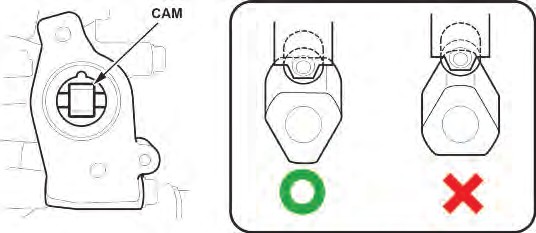
- Coat the roller, O-ring, cam and around the bore of the lifter with clean engine oil.
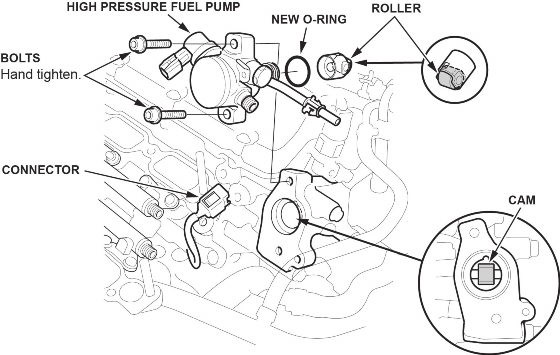
- Install the roller and the high pressure fuel pump. Install the bolts loosely by hand in an alternate pattern. Connect the connector.
NOTE
Failure to install a new fuel joint pipe will cause fuel leaks.
- Lubricate the top of the new fuel joint pipe and the threaded area of the fuel rails and the high pressure fuel pump with polyethylene glycol included in the new fuel joint pipe kit.
NOTE
Do not reuse the fuel joint pipe.
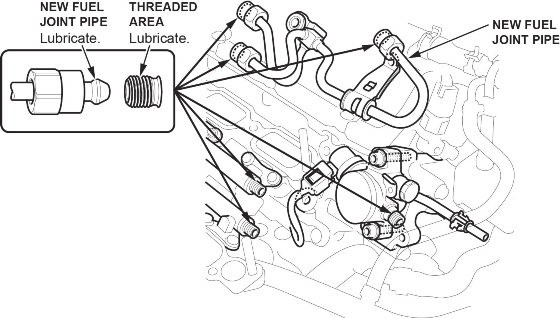
- Tighten the fuel joint pipe nuts by hand until the end of the joint pipe is seated on the fuel rails and high pressure fuel pump.
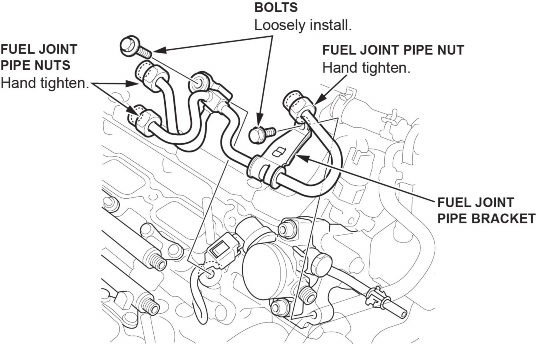
- Set the fuel joint pipe bracket on the cylinder head and loosely install the bolts.
- Tighten the high pressure fuel pump mounting bolts to the specified torque.
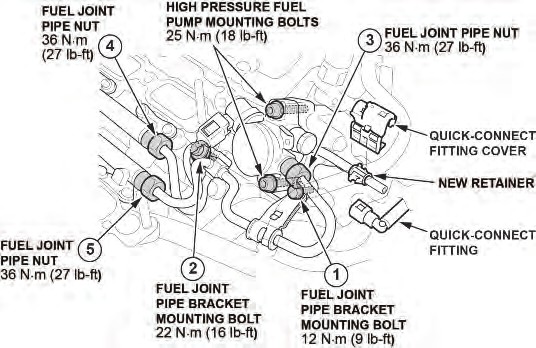
- Tighten the fuel joint pipe bracket mounting bolts and the fuel joint pipe nuts to the specified torque in the numbered sequence shown.
NOTES
- A crowfoot-type special tool increases the torque applied by the torque wrench. Search Torque Specifications on the iN for details on how to recalculate the torque wrench setting.
- Failure to tighten the fuel joint pipe nuts to the proper torque will cause a fuel leak.
- Connect the quick-connect fitting and install the quick-connect fitting cover.
- Set the power mode to ON, but do not start the engine. After the fuel pump runs for about two seconds, the fuel line will be pressurized. Repeat this two or three times, then check for fuel leakage.
- Install the high pressure fuel pump cover and torque it to 12 N·m (9 lb-ft).
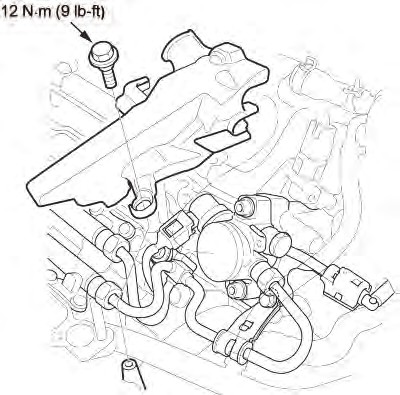
- Install the intake base and intake manifold.
END
A16-013
July 20, 2018
Version 6
A16-013
July 20, 2018
Version 6
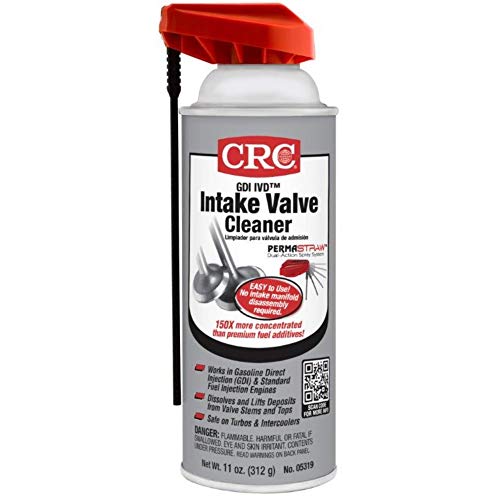
- Proven to clean intake valves on GDI engines and turbo systems
- Easily installed through the air intake system
- Highest concentration PEA (Polyether Amine) detergency available
- Proven to remove up to 46% of GDI Intake Valve deposits in 1 hour
- 150X more concentrated than fuel additives


- Removes Carbon Buildup Fast: Breaks down stubborn, baked‑on carbon deposits on intake valves and turbo components, restoring airflow and improving engine performance.
- Boosts Power & Efficiency: Regular use increases power and torque, improves MPG, and reduces rough idle, hesitation, and hard starts.
- Proven High‑Strength Formula: Delivers concentrated cleaning agents directly to intake valves—up to 150× stronger than premium fuel additives—and removes up to 46% of deposits within the first hour.
- No Engine Teardown Required: Safe for GDI and PFI engines; simply spray through the air intake system for professional‑grade cleaning without disassembly.
- Reduces Emissions & Improves Drivability: Helps restore proper combustion, reduce harmful emissions, and smooth out idle and acceleration for a cleaner‑running engine.
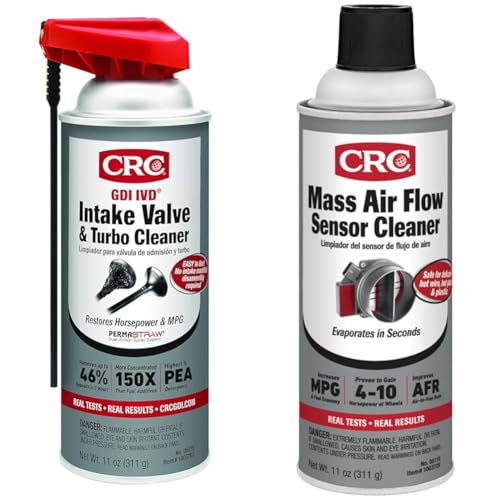
- Proven to clean intake valves on GDI engines and turbo systems with advanced Cozol technology
- Increases horsepower and improves air/fuel ratio and MPG by cleaning mass air flow sensors
- Easily installed CRC cleaner through the air intake system to remove deposits
- CRC GDI cleaner dissolves baked-on carbon deposits for smoother idle
- Mass air flow sensor cleaner dries in seconds and is plastic safe
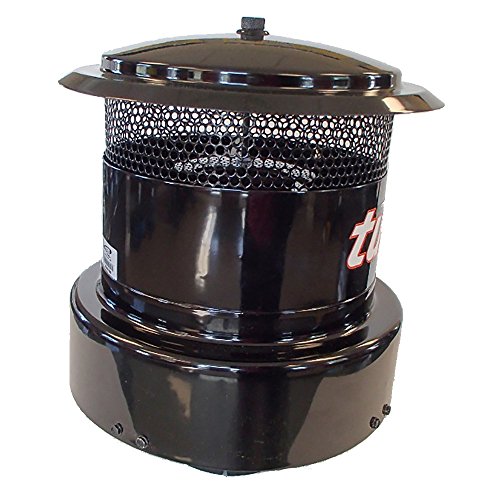
- One New Aftermarket Replacement Turbo Ii Pre-Cleaner For Model 46 (With 4.5" Inlet) That Features Ev
- OEM Numbers Are Provided for Reference Only. Please Verify Fit Prior To Ordering.
- Please Note: Some Listings Use Stock Images for Reference and May Differ from the Actual Product.
- This Aftermarket Part Is Made to Meet or Exceed Manufacturer (OEM) Specifications.
- All OEM part numbers and logos are to be used for identification purposes only.
This product presentation was made with AAWP plugin.