Service Bulletin
B21-015
August 6, 2021
Version 2
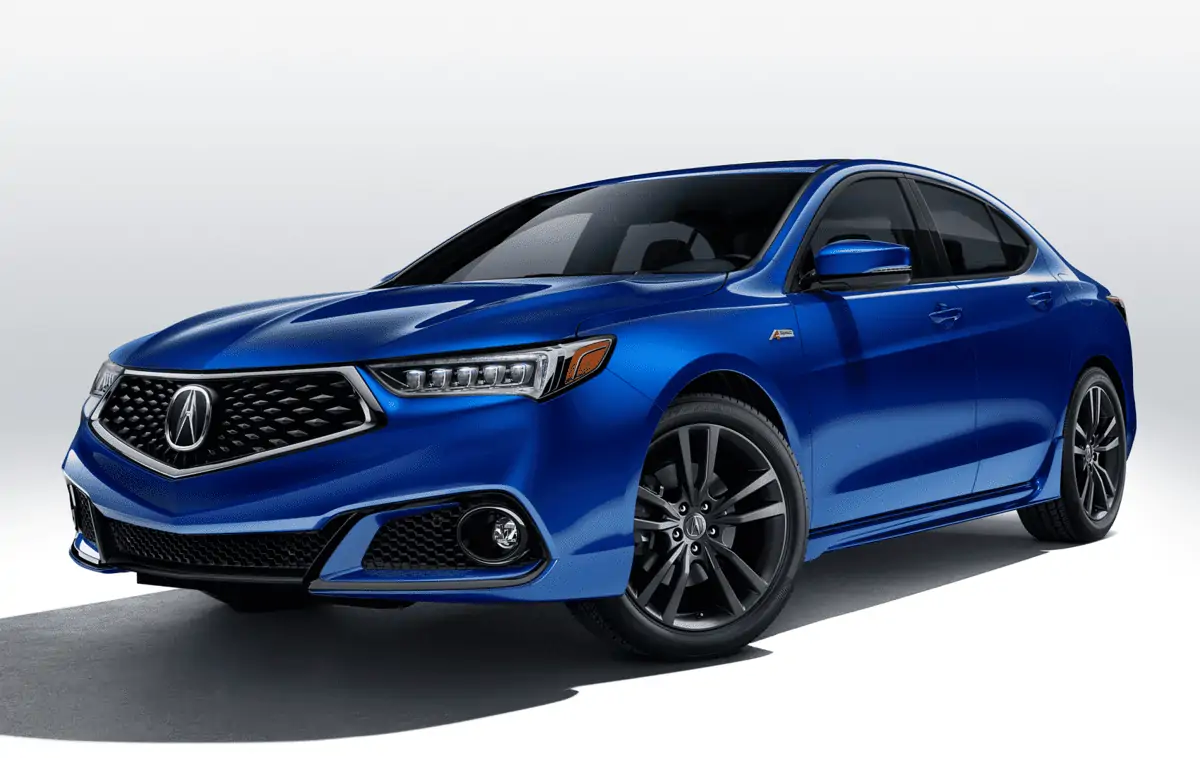
Safety Recall: 2019-20 TLX (Without SH-AWD) Fuel Pump Motor
Supersedes 21-015, dated April 16, 2021, to revise the information highlighted in yellow.
AFFECTED VEHICLES
| Year | Model | Trim Level | VIN Range |
| 2019-20 | TLX (Without SH-AWD) | ALL | Check the iN VIN status for eligibility. |
REVISION SUMMARY
Under REPAIR PROCEDURE, steps 12, 22, 23, 24, 25, and 31 were revised.
BACKGROUND
Due to swelling of the fuel pump motor impeller, the fuel pump may seize and stop working. If this occurs, the check engine light may be displayed with DTC P0087 (Fuel Rail Pressure Too Low) stored, the engine may not start, or the engine could stall while driving, increasing the risk of a crash.
CLIENT NOTIFICATION
Owners of affected vehicles will be sent a notification of this campaign.
Do an iN VIN status inquiry to make sure the vehicle is shown as eligible.
Some vehicles affected by this campaign may be in your new or used vehicle inventory.
Failure to repair a vehicle subject to a recall or campaign may subject your dealership to claims or lawsuits from the client or anyone else harmed as a result of such failure. To see if a vehicle in inventory is affected by this safety recall, do a VIN status inquiry before selling it.
CORRECTIVE ACTION
Replace the fuel pump motor.
NOTE: If the vehicle has any of the symptoms listed in BACKGROUND, you must apply this bulletin before attempting any other repairs. If the symptoms remain after the recall repair is complete, only attempt further repairs (such as replacing the high pressure fuel pump) after authorized troubleshooting.
PARTS INFORMATION
NOTE: Due to limited supply, this will be a controlled part and will require a valid VIN when ordering.
| Part Name | Part Number | Quantity |
| Fuel Pump Motor Kit (L4) | 06170-T2A-305 | 1 |
| Fuel Pump Motor Kit (V6) | 06170-T2B-305 | 1 |
For dealers experiencing a strong fuel smell from storing a fuel pump motor replaced under this service bulletin, the fuel pump motor may be disposed of immediately in accordance with local regulations. This only applies to the fuel pump motor replaced under this service bulletin. The published retention policy remains in effect for all other parts. If you have any questions about this exception or other parts retention issues, contact the WPI Administrative Office at 937-642-2737.
TOOL INFORMATION
| Tool Name | Tool Number | Quantity |
| Fuel Sender Wrench | 070AA-T0AA100 | 1 |
WARRANTY CLAIM INFORMATION
| Operation Number | Description | Flat Rate Time | Defect Code | Symptom Code | Template ID | Failed Part Number |
| 3101HK | L4 – Replace the fuel pump motor. | 0.9 hr | 6FE00 | OAN00 | B21015A | 17045-T2A-A01 |
| V6 – Replace the fuel pump motor. | B21015B | 17045-T2B-A01 |
Skill Level: Repair Technician
REPAIR PROCEDURE
⚠ WARNING
Fuel pump motor removal exposes fuel, which can ignite, causing a fire or explosion.
This can cause serious injury or death.
Always work in a well-ventilated area, and keep sparks or open flames away.
1. Insert the emergency fuel funnel into the fuel filler neck to relieve the pressure in the fuel tank.
NOTE: Remove the emergency fuel funnel from its case in the trunk tool box.
2. Relieve the fuel pressure.
With an i-HDS
- Connect an i-HDS to the vehicle.
- Turn the vehicle to ON.
- Select the PGM-FI system on the i-HDS.
- Select FUEL PUMP OFF from the Function Test menu.
- Start the engine, and let it idle until it stalls.
- Turn the ignition to OFF.
Without an i-HDS
- Start the engine, and let it idle until it stalls.
- Turn the ignition to OFF.
- Install the PGM-FI main relay 2.
NOTE:
- Do not allow the engine to idle above 1,000 rpm or the PCM will continue to operate the fuel pump.
- A pending or confirmed DTC may be set during this procedure. After the repair is complete, check for DTCs, and clear them as needed.
3. Open the positive battery terminal cover.
4. Disconnect both 12-volt battery terminals.
NOTICE
To protect the terminal connector from damage, do not hold it when removing the negative terminal.
NOTE:
- Always disconnect the negative terminal first.
- Do not disconnect the 12-volt battery sensor from the cable.
5. Remove the rear seat cushion bolt.
6. While pushing down on the rear seat cushion, pull the seat hook handles to release the hooks.
With rear seat heaters: Disconnect the connectors and remove the harness clips.
7. Pull back the seat cushion to pull off the seat belt buckles from the slits in the seat cushion.
8. Remove the rear seat cushion.
9. Remove the fuel tank unit access panel and disconnect the fuel pump unit connector.
10. Place a rag or shop towel over the quick-connect fitting, and disconnect it.
11. Remove the fuel tank unit locknut using the fuel sender wrench (T/N 070AA-T0AA100) as shown.
NOTE: Keep the fuel sender wrench from floating.
12. Remove the fuel tank unit.
NOTICE
Do not to bend or twist the fuel level sensor arm excessively. This may damage the fuel level sensor or cause it to send inaccurate readings.
NOTE: After unlocking the fuel tank unit cam lock ring, clean the top of the fuel pump flange and adjacent areas to make sure it’s free of dirt, dust, and debris.
13. Prepare the fuel pump and parts to be replaced.
NOTE: Take a photo of the fuel tube and wire harness, and note their routing for assembly. There are various types of routing.
14. Spread the wire harness clamps, and remove the wire harness. Make sure not to damage the wire harness.
NOTICE
Do not spread the clamps too wide. Spreading them too wide may damage them.
15. Press the tab on the fuel level sensor to release the lock. Then, push up on the fuel level sensor.
16. Disconnect the fuel level sensor harness and remove the fuel level sensor from the fuel tank unit.
17. Remove the E-rings, and discard them.
18. Disconnect the joint at the bottom of the reservoir.
19. Remove the fuel filter assembly from the reservoir by releasing the three clips.
NOTICE
Do not spread the clips too wide. Spreading them too wide may damage them.
NOTE: The spring may slide off the sliding shaft. Retain this spring. It will be used during assembly.
20. Release the three clips at the base of the fuel pump assembly and remove it from the fuel filter.
21. Pull the fuel pump assembly out of the fuel filter.
NOTE: If the O-ring remains on the fuel filter, use a flat-tip screwdriver wrapped in protective tape to remove it. Make sure not to damage the O-ring seat section.
22. Install the new spacer on the new fuel pump motor.
23. Install the new O-ring, then lubricate the outside edge of it, using only clean engine oil.
NOTE: Do not pinch the O-ring during installation.
24. Install the new harness and make sure the connection is secure and the connectors are firmly locked into place.
25. Place the fuel pump on a bench, then install the filter to the fuel pump.
NOTE: If the fuel pump does not engage into the fuel filter and re-insertion is necessary, confirm that the O-ring is seated on the fuel pump before repeating installation.
26. Install the fuel filter assembly to the reservoir.
NOTE:
- Coat the O-ring with clean engine oil; do not use any other oil or fluid.
- Do not pinch the O-ring during installation.
- Insert the spring into the sliding shaft, and make sure it is lined up when installing the fuel filter.
- Make sure the fuel tube is routed exactly as shown in the photo taken before disassembly.
- Make sure the three clips are fully engaged.
27. Install the new E-rings.
NOTE: After installation, make sure the E-rings can be rotated with your finger. If they cannot be rotated, the E-rings may not be fully seated or may be incorrectly installed.
28. Install the fuel level sensor to the reservoir. Make sure the lock is engaged and the connection is secure.
NOTICE
Do not to bend or twist the fuel level sensor arm excessively. This may damage the fuel level sensor or cause it to send inaccurate readings.
29. Install the wiring harness to the clamps.
NOTICE
Do not spread the clamps too wide. Spreading them too wide may damage them.
NOTE:
- Clip in the smaller harness wires followed by the larger wires.
- Make sure not to damage the wire harness.
- Make sure to route the wire harness exactly as shown in the photo taken before disassembly.
30. While compressing the fuel tank unit, make sure the movement is smooth and the fuel tube and wiring harness do not stretch, pinch, or bind.
31. Install the new O-ring to the fuel tank, then partially install the new fuel tank unit.
NOTE:
- Before installing the new O-ring, clean the fuel tank around the fuel pump opening where the O-ring will seat. The tank opening must be free of dirt, dust, and debris.
- Be careful not to damage the O-ring.
- Do not coat the O-ring with any oil.
32. Line up the mark on the fuel tank unit to the marks on the fuel tank, then insert the fuel tank unit into the fuel tank.
NOTE: To avoid any leaks, check the O-ring, either visually or by hand, to make sure it is not pinched.
33. Line up the mark on the new locknut to the start of the thread on the fuel tank.
34. Press down on the fuel tank unit while turning the locknut clockwise by hand.
35. Using the fuel nut wrench, tighten the locknut to 100 N·m (74 lb-ft).
NOTE:
- During installation, check the O-ring, either visually or by hand, to make sure it is not pinched.
- After tightening, make sure the mark on the fuel tank unit is still lined up with the marks on the fuel tank.
36. Remove the quick-connect fitting retainer from the fuel tank unit, then install a new retainer onto the quick- connect fitting.
37. Connect the fuel line quick-connect fitting.
38. Connect the fuel tank unit connector.
39. Connect the 12-volt battery terminals.
40. Turn the ignition to ON, but do not turn the engine on. After the fuel pump runs for about 2 seconds, the fuel line will be pressurized. Repeat this two or three times, then make sure there is no fuel leakage.
41. Install the fuel tank unit access panel.
42. Install the remaining parts in the reverse order of removal.
43. Clear all DTCs using an i-HDS.
44. California residents only: Fill out a Vehicle Emissions Recall – Proof of Correction certificate, and use OAN as the recall number. Have the service consultant give the certificate to your client, and advise him or her to keep it as proof that the recall was completed. Your client will need to submit this certificate to the DMV only if the DMV requests it. If you need more certificates, use reorder number Y0657.
END
SEOCONTENT-START
NHTSA Recall Number: 21V-215
Acura Campaign Number: OAN
Service Bulletin Number: 21-015
AUTOMOBILE DIVISION
American Honda Motor Co., Inc.
1919 Torrance Blvd., P.O. Box 2215
Torrance, CA 90509-9870
This notice is sent to you in accordance with the National Traffic and Motor Vehicle Safety Act. Acura has decided that a defect which
relates to motor vehicle safety exists in certain 2019 – 2020 model year TLX 2WD vehicles that may have a fuel pump module with out of
specification impellers.
Why my vehicle is under recall: Over time, these impellers may absorb an excessive amount of fuel and deform. A
deformed impeller may cause the fuel pump to stop working.
Safety Consequence
An inoperative fuel pump could prevent an engine from starting or cause a vehicle to stall
while being driven, increasing the risk of a crash.
Emission Consequence
The check engine light may illuminate as a result of this defect. Your vehicle may fail a
state or local emissions inspection when such tests are required under state law if you do
not have the repair done.
What Acura will do: Your Acura dealer will replace the fuel pump assembly for FREE. Acura estimates that the
repair will take approximately 1 hour to complete. However, your dealer can provide you
with a better estimate of the overall time for this service visit, as it may be necessary to
make your vehicle available for a longer period of time.
What we need you to do:
California Owners Only
The DMV will not renew your vehicle’s registration until this emissions recall has been
completed. After completing the repair procedure, your dealer will give you a Vehicle
Emission Recall – Proof of Correction certificate. Please make sure the dealer completes
and provides you the certificate. Keep the certificate for your records as proof that the
emissions recall was completed. Submit the certificate to the DMV only if the DMV
requests it.
Emission Warranty
In order to ensure your full protection under the emission warranty provisions, it is
recommended that you have your vehicle repaired as soon as possible. Failure to do so
could be determined as lack of proper maintenance.
• Check recall information for your vehicle by accessing the Acura Recall Lookup tool
at www.recalls.acura.com and entering your Vehicle Identification Number (VIN).
• If you have questions or concerns, we encourage you to:
o call American Honda’s Customer Support & Campaign Center at 1-888-234-2138
Monday through Friday, 6:00 a.m. to 5:00 p.m., Pacific Time; or
o contact your local Acura automobile dealer; or
o email or chat by going to www.owners.acura.com/help/client-relations; or
o visit Twitter @AcuraClientCare; or
o visit www.recalls.acura.com to use “Ask Us”, our 24/7 virtual agent.
If you paid out of pocket to have these specific recall repairs performed on your vehicle, you may be eligible for reimbursement; please
contact American Honda’s Customer Support & Campaign Center at 1-888-234-2138 to determine potential eligibility and for instructions
on how to request reimbursement.
If you no longer own this vehicle or if any of the information is not correct, please complete and return the enclosed prepaid Information
Change Card as soon as possible. If you are a lessor of this vehicle, federal regulations require you to forward this notice to your lessee
within ten days.
If you believe that American Honda or the dealer has failed or is unable to remedy the defect in your vehicle, without charge and within a
reasonable period of time (60 days from the date you first contact the dealer for a repair appointment), you may submit a complaint to
the Administrator, National Highway Traffic Safety Administration (NHTSA), 1200 New Jersey Ave., SE, Washington, DC 20590.
Alternatively, you may call the NHTSA toll-free Vehicle Safety Hotline at 1-888-327-4236 (TTY 1-800-424-9153), or go to
https://www.safercar.gov.
We sincerely apologize for any inconvenience this recall may cause, but please be assured that your safety is our first concern.
Sincerely,
American Honda Motor Co., Inc.
IMPORTANT SAFETY RECALL
Please call any authorized Acura dealer and schedule an appointment to have your
vehicle repaired for FREE.
If you are not the only driver of this vehicle, please advise all other drivers and
passengers of this important information.
This notice applies to your vehicle: XXXXXXXXXXXXXXXXX
May 2021
Dear FIRSTNAME LASTNAME, 99999999
Número de campaña de seguridad NHTSA: 21V-215
Número de campaña de Acura: OAN
Número de boletín de servicio: 21-015
DIVISIÓN AUTOMOTRIZ
American Honda Motor Co., Inc.
1919 Torrance Blvd., P.O. Box 2215
Torrance, CA 90509-9870
Esta notificación ha sido enviada a usted de acuerdo con el decreto de la oficina de Administración Nacional de Seguridad del Tráfico en las
Carreteras (National Highway Traffic Safety Administration o NHTSA por sus siglas en inglés). Acura ha determinado que existe un defecto el
cual está relacionado con la seguridad del vehículo en algunos modelos TLX 2WD año modelo 2019 – 2020 que pueden tener un módulo de la
bomba de combustible con impulsores fuera de especificación.
¿Por qué mi vehículo está bajo esta campaña de seguridad?:
Con el paso del tiempo, estos impulsores pueden absorber una cantidad excesiva de
combustible y deformarse. Un impulsor deformado puede ocasionar que la bomba de
combustible deje de funcionar.
Consecuencia de seguridad
Una bomba de combustible inoperativa puede prevenir que un motor no arranque u ocasionar
que un vehículo se detenga cuando es conducido, aumentando el riesgo de un choque.
Consecuencia de emisión
La luz indicadora de fallas (verificar el motor) puede iluminarse como resultado de este defecto.
Su vehículo puede fallar una inspección de emisiones local o estatal cuando tales pruebas
sean requeridas bajo la ley estatal si usted no completa la reparación.
¿Qué hará Acura?: Su concesionario Acura reemplazará el conjunto de la bomba de combustible de forma
GRATUITA. Acura estima que la reparación tomará aproximadamente 1 hora para completar.
No obstante, su concesionario le puede ofrecer un mejor estimado del tiempo total de esta
visita de servicio, ya que pudiera ser necesario que su vehículo esté disponible por un periodo
más largo.
¿Qué necesitamos que usted haga?:
Solamente propietarios en California
El DMV no renovará su registro del vehículo hasta que esta campaña de seguridad de
emisiones haya sido completada. Después de completar este procedimiento de reparación, su
concesionario le entregará un certificado de Prueba de Corrección – Campaña de seguridad de
emisiones del vehículo (Vehicle Emissions Recall – Proof of Correction). Por favor asegúrese
que el concesionario complete y le otorgue el certificado. Mantenga el certificado para sus
registros como prueba que la campaña de emisiones fue completada. Envíe el certificado para
el DMV solamente si el DMV lo solicita.
Garantía de emisiones
A fin de garantizar su protección completa bajo las disposiciones con respecto a la garantía de
emisiones, se recomienda que haga que su vehículo sea reparado tan pronto sea posible. De
no hacerlo podría determinarse como una falta de mantenimiento adecuado.
• Verifique la información de la campaña de seguridad de su vehículo ingresando en la
herramienta Acura Recall Lookup en www.recalls.acura.com e ingresando su Número de
identificación del vehículo (VIN).
• Si usted tiene preguntas o inquietudes, le recomendamos que:
o llame al Centro de Apoyo al Cliente y Campañas de American Honda al 1-888-234-2138
de lunes a viernes, 6:00 a.m. a 5:00 p.m., hora del Pacífico; o
o comuníquese con su concesionario de automóviles Acura local; o
o envíe un correo electrónico o chat por medio de www.owners.acura.com/help/clientrelations;
o
o visite Twitter @AcuraClientCare; o
o visite www.recalls.acura.com.
Si usted ha pagado por realizar las reparaciones de la campaña de seguridad específica en su vehículo, usted puede ser elegible para el
reembolso, por favor comuníquese con el Centro de Apoyo al Cliente y Campañas de American Honda al 1-888-234-2138 para determinar la
elegibilidad potencial y para las instrucciones sobre cómo solicitar el reembolso.
Si ya no es el propietario de este vehículo o si alguna información no está correcta, por favor complete, firme y devuelva lo más pronto posible
la Tarjeta de Cambio de Información anexa, con el porte pagado. Si usted es el arrendador de este vehículo, las regulaciones federales
requieren que usted envié una copia de esta notificación a su arrendatario en un lapso de diez días.
Si usted cree que American Honda o el concesionario ha fallado o no le es posible reparar el defecto en su vehículo, sin cobro alguno y dentro
de un período de tiempo razonable (60 días desde la fecha en que usted contactó por primera vez el concesionario para la cita de la
reparación), usted puede enviar una queja a: Administrator, National Highway Traffic Safety Administration (NHTSA), 1200 New Jersey Ave.,
SE, Washington, DC 20590. Alternativamente, usted también puede comunicarse con el número de llamada sin costo (Toll-free) Vehicle Safety
Hotline de NHTSA al 1-888-327-4236 (TTY 1-800-424-9153), o visitar la página https://www.safercar.gov.
Sinceramente le pedimos disculpas por cualquier inconveniente que pueda haberle causado esta campaña de seguridad, pero tenga
garantizado que su seguridad es nuestra principal preocupación.
Atentamente,
American Honda Motor Co., Inc.
CAMPAÑA DE SEGURIDAD IMPORTANTE
Por favor llame a cualquier concesionario autorizado Acura y programe una cita para la
reparación de su vehículo de forma GRATUITA.
Si usted no es el único conductor de este vehículo, por favor informe a todos los
conductores y pasajeros sobre esta información importante.
Esta notificación aplica a su vehículo: XXXXXXXXXXXXXXXXX
Mayo del 2021
Estimado FIRSTNAME LASTNAME,
SEOCONTENT-END
Remedy Instructions and TSB
RCRIT-21V215-2993.pdf 1858.02KB
Remedy Instructions and TSB
RCRIT-21V215-1555.pdf 1951.136KB
ISSUED Owner Notification Letter(Part 577)- Acura 2019-20 TLX 2WD
RCONL-21V215-9290.pdf 63.887KB

- Proven to clean intake valves on GDI engines and turbo systems
- Easily installed through the air intake system
- Highest concentration PEA (Polyether Amine) detergency available
- Proven to remove up to 46% of GDI Intake Valve deposits in 1 hour
- 150X more concentrated than fuel additives


- Removes Carbon Buildup Fast: Breaks down stubborn, baked‑on carbon deposits on intake valves and turbo components, restoring airflow and improving engine performance.
- Boosts Power & Efficiency: Regular use increases power and torque, improves MPG, and reduces rough idle, hesitation, and hard starts.
- Proven High‑Strength Formula: Delivers concentrated cleaning agents directly to intake valves—up to 150× stronger than premium fuel additives—and removes up to 46% of deposits within the first hour.
- No Engine Teardown Required: Safe for GDI and PFI engines; simply spray through the air intake system for professional‑grade cleaning without disassembly.
- Reduces Emissions & Improves Drivability: Helps restore proper combustion, reduce harmful emissions, and smooth out idle and acceleration for a cleaner‑running engine.

- Proven to clean intake valves on GDI engines and turbo systems with advanced Cozol technology
- Increases horsepower and improves air/fuel ratio and MPG by cleaning mass air flow sensors
- Easily installed CRC cleaner through the air intake system to remove deposits
- CRC GDI cleaner dissolves baked-on carbon deposits for smoother idle
- Mass air flow sensor cleaner dries in seconds and is plastic safe

- Formulated for Use In All Fuel-Injected Gasoline Engines, Including GDI
- Contains Polyetheramine (“PEA”) to Dissolve Carbon Buildup in Combustion Chambers
- Cleans ALL Types of Intake Valves, Including Those Found in PFI, TBI, and GDI Engines
- Safe On Catalytic Converters and Oxygen Sensors
- Not For Use In Diesel Engines

- One New Aftermarket Replacement Turbo Ii Pre-Cleaner For Model 46 (With 4.5" Inlet) That Features Ev
- OEM Numbers Are Provided for Reference Only. Please Verify Fit Prior To Ordering.
- Please Note: Some Listings Use Stock Images for Reference and May Differ from the Actual Product.
- This Aftermarket Part Is Made to Meet or Exceed Manufacturer (OEM) Specifications.
- All OEM part numbers and logos are to be used for identification purposes only.
This product presentation was made with AAWP plugin.